
Celebrating is the Fuel

Kampus Productions Photo
Why Your Fall Wins Matter More Than You Think
Just yesterday, I was working with two PBIS teams on data-based decision making. One school leader joked that asking teachers to do anything extra right now wasn't a good idea—maybe we should just extend Thanksgiving break until the new year. Everyone laughed and knew exactly what she was talking about. We all know! December is that month.
But then a teacher on special assignment said something that stuck with me: "This training is taking time out of our schedule today, but I think it's actually going to save us time. Our current meetings aren't accomplishing much. We have a lot of problem admiration happening, but we're not actually improving outcomes for students. Today you gave us a real process." And the school leader chimed in, “It’ll make us more efficient with our time.”
The phrase “problem admiration” is likely one you’ve heard. We’ve all been there. Sometimes we’re a little too good at identifying problems. We can list what's not working faster than we can make our morning coffee. But celebrating what is working? That feels indulgent. Like we’re having dessert before dinner.
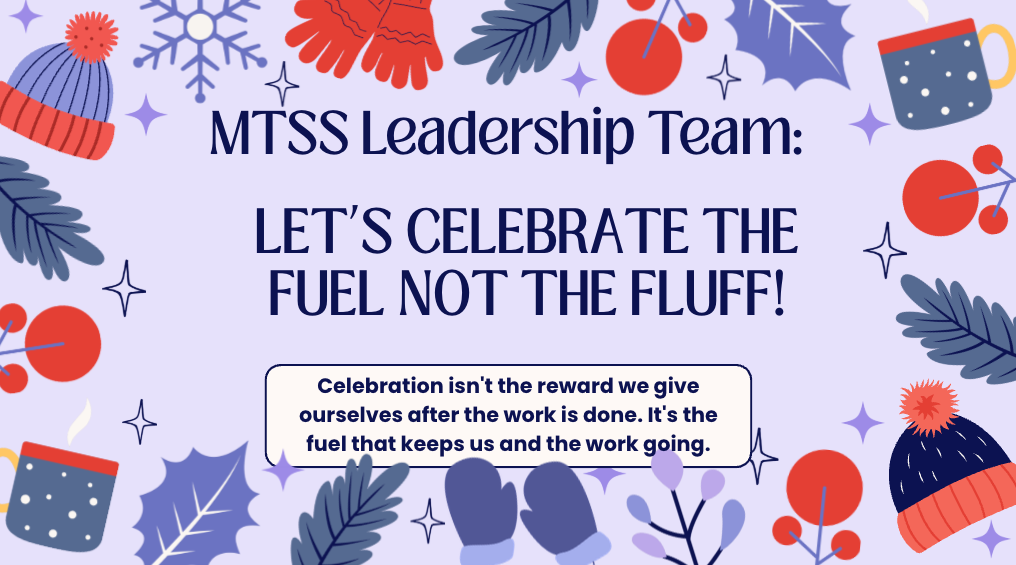
But here's what I’ve also experienced and know to be true: Celebration isn't the reward we give ourselves after the work is done. It's the fuel that keeps us and the work going.
The Question You're Probably Not Asking
Most MTSS teams head into winter break thinking about what slipped—the interventions only partially implemented, the data review that didn't happen, the teachers overwhelmed with pre-vacation student behavior. One team yesterday spoke about their success with their teacher and staff recognition system and how there’s no gift cards associated with it but students and all the staff have been appreciating the chance to celebrate each other.
So before you leave the building I’d like to encourage you take time as a MTSS leadership team to give those positive shout outs:
Name what's working. Get specific. Write it down. Look for themes. Let those wins soak in—really appreciate them.
Honor the people. Identify who made it happen and decide how you'll acknowledge them. Send the card. Write the email. Give the shout out. Make it specific and make it happen.
Reflect on what to keep and what to shift. What's running on its own now? What needs more attention? What did you learn that can help you build an even stronger second half?
This isn't fluff. This is how teams maintain focus on improvement rather than just problems. This is how you build cohesion and help people see the impact of their work. This is how you carry momentum forward instead of starting from scratch every January.
Why Celebration Matters More Than You Think
I know it might feel indulgent to focus on wins right now. You're exhausted. There's still so much that needs to get done before break. Celebrating feels like something you do after the work is done, offered as more of a reward. But here's the truth: Celebration isn't a reward. It's fuel.
Teams who pause to recognize their own progress come back in January with more clarity, more ownership, and more willingness to keep going. They know what's working. They trust the foundation they've built. And they're not starting from scratch—they're building forward.
I also want to challenge the notion that celebration is just a soft skill. I contend that it should be a systems skill that gets woven into our MTSS structures. It strengthens culture, builds coherence, and reminds people that their effort is visible and meaningful.
Gather your fuel to build momentum towards January
As your MTSS team heads into winter break, please pause and recognize something important: Progress doesn't happen by accident. It happens because specific people did specific things—often without fanfare, often on top of everything else they were already doing. Think about the past few months. What's one thing that's working—even a little bit—that wasn't working before?
For example, maybe it's:
Attendance rates that have improved by 5% since October
Teachers consistently implementing greetings at the door
A progress monitoring schedule that's finally dialed in
An SEL curriculum pilot that actually gained traction
These aren't small things. They're evidence that your MTSS process is making an impact, that your people are showing up, that change is happening in real time.
What You're Taking Into the New Year
Before you leave for break, ask yourself: What's one thing you're proud of about the work you did this fall—about yourself, about your team, or about your school?
Whatever your answer is, that's not just a nice feeling. That's fuel. That's what will bring you back in January ready to keep building. Write it down, post it at your desk so you see it when you return from break. Share it and take that moment to appreciate it. If you don't pause to name it, you'll miss the momentum that can carry you into January.
Cheers to you and the progress you and your team have already made! Go Team!
P.S. If your team needs help moving from problem admiration to actual problem-solving, you're not alone. That shift is exactly what strong MTSS systems are built on—and it's learnable. More on that coming in the new year.